
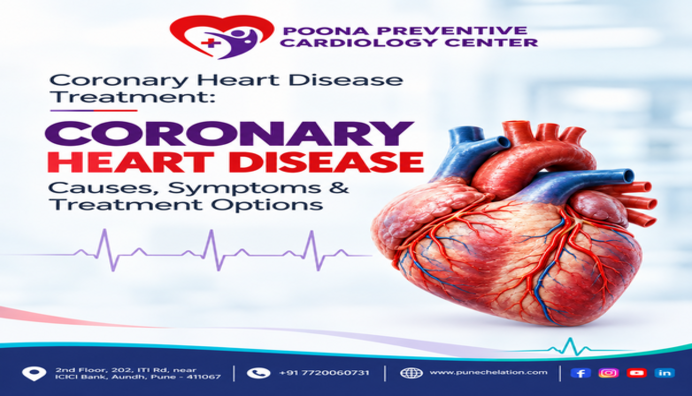
Coronary Heart Disease
Coronary heart disease is a narrowing or blocking of the coronary arteries, resulting in reduced oxygen supply to the heart. CHD is caused by atherosclerosis. Atherosclerosis is a build-up of plaque in the walls of the arteries composed of fat and cholesterol.
Causes, Symptoms, and Risk Factors
Damage and plaque build-up in the arteries from high LDL cholesterol and hypertension lead to coronary heart disease. Some of the risk factors are diabetes, obesity, poor diet, lack of exercise, old age, smoking, stress and a family history of heart disease.
Instances may involve chest discomfort or a feeling of tightness in the chest, breathing difficulties, severe tiredness, lightheadedness (dizziness), or difficulty responding to vigorous exercise. The patient may also suffer from pain that extends to their arm, shoulder, neck, jaw, or back.. There are patients who may not experience any symptoms at all. Serious chest pain or persistent pain, particularly if caused by sweating, breathing difficulties such as passing out, being unconscious and/or spreading discomfort should be immediately treated in an EMT.
Diagnosis of coronary heart disease.
The initial step in diagnosing coronary artery disease is to conduct a physical examination and review the patient's medical history. Based on the patient's symptoms and risk factors, the doctor may suggest an ECG, echocardiogram, stress test, blood analysis, or a coronary angiography. What is the recommended procedure? These tests may vary depending on the patient's condition.
Treatment options for Coronary Heart Disease.
The severity of coronary heart disease, the manifestations, and overall health are all factors that determine treatment options. Treatments such as diet modifications, exercise routines, drugs, and alternative rehabilitation methods are available. Assistance is provided upon request. Angioplasty and coronary bypass surgery are sometimes used to treat people with very narrow arteries.
Treatment Without Surgery.
Patients may not require any surgical treatment to manage the condition. The individual patient's needs should be addressed by a cardiologist who provides treatment.
A Healthy Heart and a Healthy Lifestyle are two words that define heart health.
A healthy lifestyle is essential for maintaining the health of our cardiovascular system. Recommended measures may include a balanced diet, healthy weight management and exercise (weight loss), adequate stress relief, smoking cessation, as well as monitoring blood pressure and sugar levels.
The Value of the Early Treatment.?
Diagnosing and treating the issue helps prevent complications while safeguarding the heart valves, leading to improved quality of life. The sooner you recognize any risk factors, the more advantageous they are for managing your heart health..
What are the signs that indicate it is necessary to consult a Cardiologist?
Contact the cardiologist if you experience chest pain, shallow breathing, unexpected fatigue, or signs of heart health problems. Please report any abnormalities as soon as possible.
Protocol is provided and should not be substituted for medical care nor emergency care your doctor orders . Patients admitted with severe and continuing chest pain and/or with breathlessness and collapse or faintness shall be admitted to the hospital as heart-attack patients requiring urgent management services with promptness. In addition to those mentioned, the Center will provide preventive cardiology and lifestyle modification treatment along with medical treatment and some non-surgical interventions to integrate all approaches.
Arterial Clearance TherapyArterial clearance therapy is included in the list of treatments the center uses in the medical treatment and blockage relief management of the patient's coronary heart disease and is designed for each patient based on individual requirements and a clinical evaluation.
ECP or EECP therapyECP or EECP therapy, otherwise know as external counter-pulsation is offered by the center to selected cardiac patients as non-invasive procedure where according to the center the standard therapy protocol comprises of 35 treatments of an hour each over a period of about six to seven weeks.
ESMR TreatmentESMR, another non-invasive cardiac treatment available at the center is basically referred to as the extracorporeal shockwave myocardial revascularization and this treatment is used to augment the delivery of blood to the heart and relief symptoms appropriate for the selected patient, according to the center.
HBOT TreatmentThis method consists of breathing oxygen at the pressure higher than atmospheric pressure. According to Poona Preventive Cardiology Centre it helps to enhance oxygen delivery to the body tissues and the recovery processes of the heart for a selection of patients.
Lifestyle and Diet ManagementBehavior changes of lifestyle is an integral part of this approach. It may involve a healthy balanced diet, physical activities, weight control, stress management, smoking cessation, and controlling your risks factors. Nutraceuticals, antioxidant vitamins, nutraceuticals supplements, and vitamins are some other agents that are in list at this preventive cardiology center.
Personalised Treatment ApproachThe treatments, protocols and approach varies from patient to patient and requires a cardiologist assessment before the selection of appropriate treatment or an aggregate of methods to the patient. There is a tailored and personally designed approach to meet heart health needs for an individual.
Disclaimer: These are just protocols and should not be replaced by emergency cardiac care nor by medical management determined by your physician. Patients experiencing severe and persistent chest pains, breathlessness, collapse or faintness are to be admitted to the hospital as potential heart-attack and need emergency services at the earliest.
FAQ.
Can coronary heart disease be managed without the need for surgery?
There are multiple approaches to managing this condition, including medication courses, lifestyle modifications and nutritional supplements, and rehabilitation. However...
Are there any treatments available for coronary artery disease?
It can be treated, but every instance necessitates a different approach.
When is angioplasty and bypass surgery required?
Upon receiving medical advice from the doctor regarding severe coronary artery disease.
Your email address will not be published. Required fields are marked *
